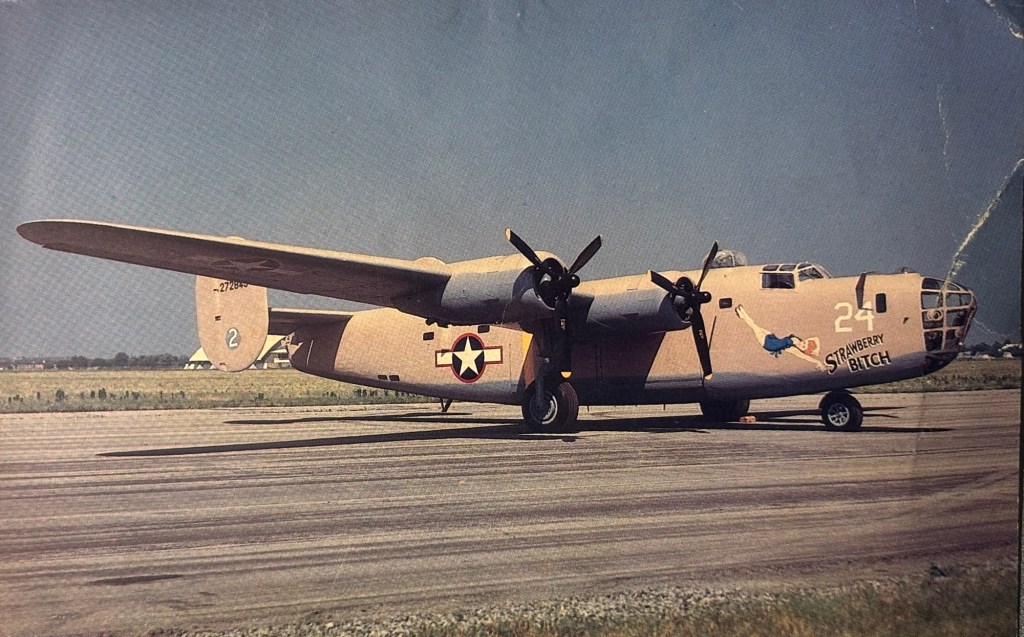
After my dad had to bail out of his B-24 and was captured by German farmers near Freden, he was taken to Stalag Luft Ein, a prisoner-of-war camp for Allied air crew members. He was one of some 8,000 POWs — Kriegies they called themselves — at the camp near Barth in northern Germany. He spent 15 months there, only leaving after the Russians came through near the end of the war and liberated the POW camp.

A member of the Eighth Army Air Force stationed in England, Daddy always said that Jimmy Stewart, the famous actor of early 1940s, was his commander. I haven’t checked on that, but I do know that Jimmy Stewart signed up when the war began to express his patriotism and fight the Nazi threat. Daddy didn’t talk much about the whole experience, but he was proud to serve with the famous Stewart.
My sister remembers that Daddy told a story of Stewart borrowing his flight jacket once for a photo op! Daddy’s claim to fame, she says!
I remember very little of what Daddy may have said about life in the POW camp. The two things I remember are that he hated the food and he and the other prisoners were constantly trying to escape.
People always asked, “Did you try to escape?”
Daddy always answered the same way: “We didn’t do anything else.”
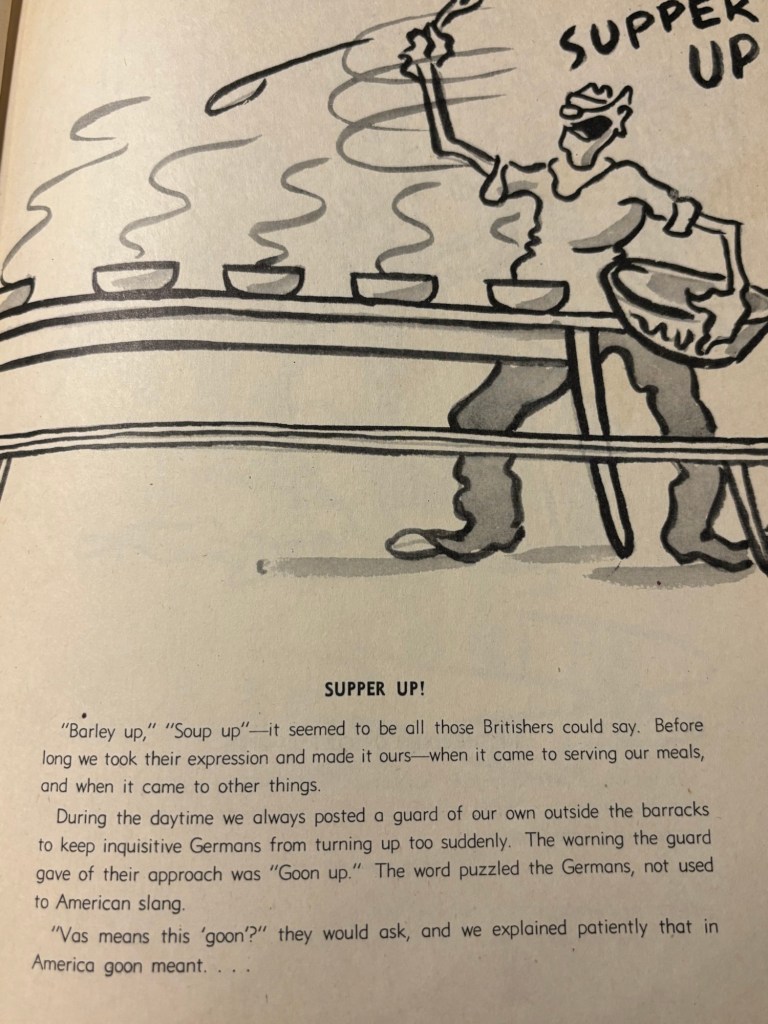
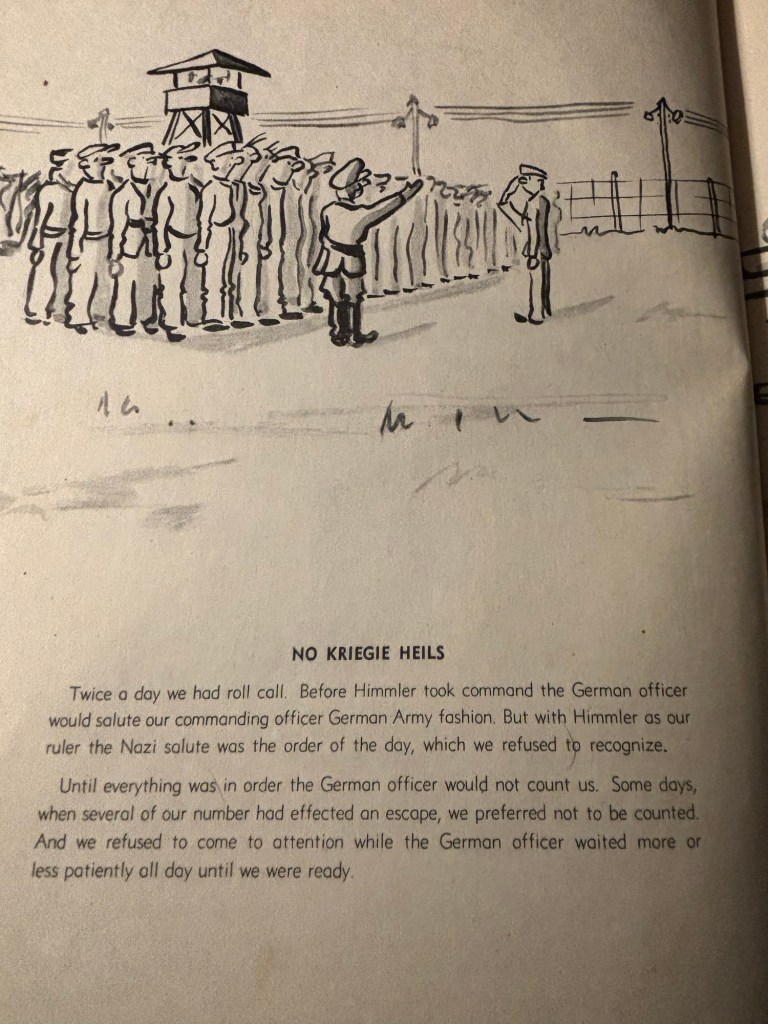
Cartoons from the book Welcome to POW Camp, which I mentioned in previous posts, bear this out.

These cartoons provide a bit of insight into what life was like in the prison.

Probably the dominant thing that I remember from my Daddy’s few comments about the war and his POW time was his strong belief that the sacrifice and the discomfort were all worth it, because the dangers of Hitler’s Nazi assault on the world demanded that Americans step up and join the Allies to defeat him.
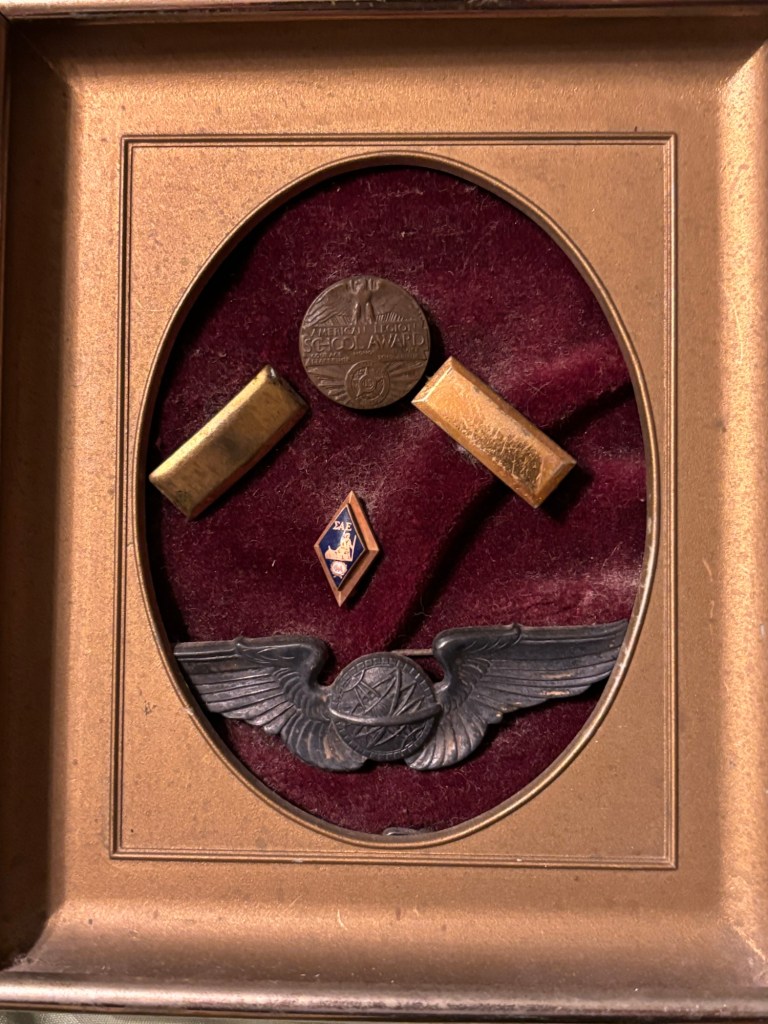
Daddy was awarded an Air Medal, American Defense Service Medal, and the EAME Theater Ribbon with a battle star for his service. As far as I know, he never displayed those or talked about them. I only discovered this list of medals recently when I found his discharge orders in some things of his that I’ve had for years.
The whole experience left him proud and dedicated to his life as a newspaper man, spreading truth in the world. It must have had serious effects on his health, as his heart started to go in his 50s, and at 66 he died following bypass surgery.
He was as good a man as has ever walked this earth, and he was equally kind and generous to everyone, regardless of their status. All of us, his children, have struggled to live up to the high standards he set.
And we still love, honor and miss him these 39 years later.
 Shunyata's Apprentice
that was a great post! So true of all I remember from his stories. One other thing he would never eat was rutabaga. Mother never served them and I won’t eat them today!
I also remember that he told the tale that Jimmy Stewart borrowed Daddy’s flight jacket either for a photo shoot or for some reason I don’t quite remember!
thanks for recording these memories!!